THE HOUSE
It started with what was possible.
An audio publishing house, founded in 2020, when nothing else could be made.
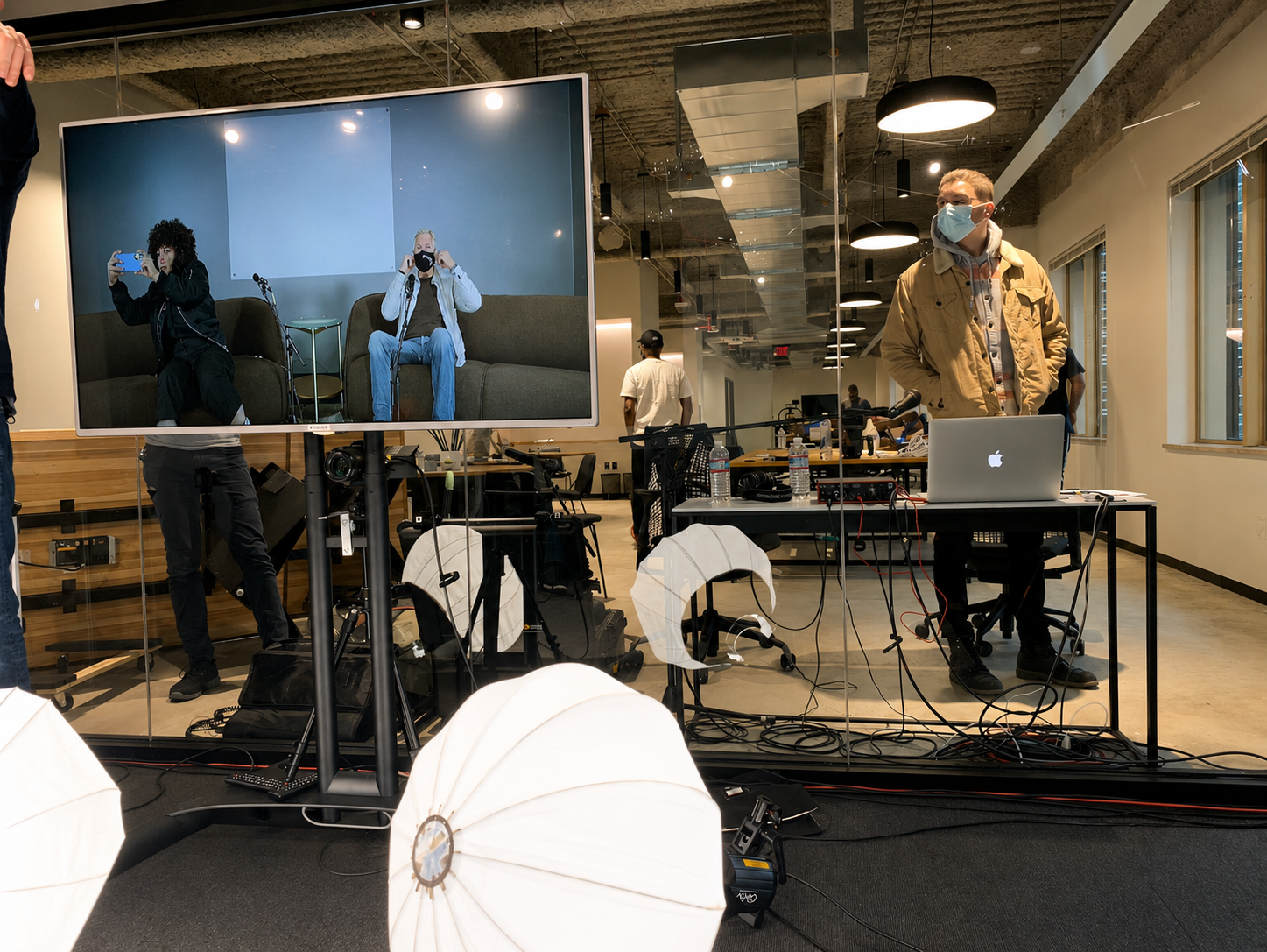
The first sessions, 2020
In 2020, production stopped. There were plenty of crews sitting at home unhired. What there was not was any way to put two of them in a room together, and the budgets went with it. It was the worst year in a generation to start a company, which is when this one started.
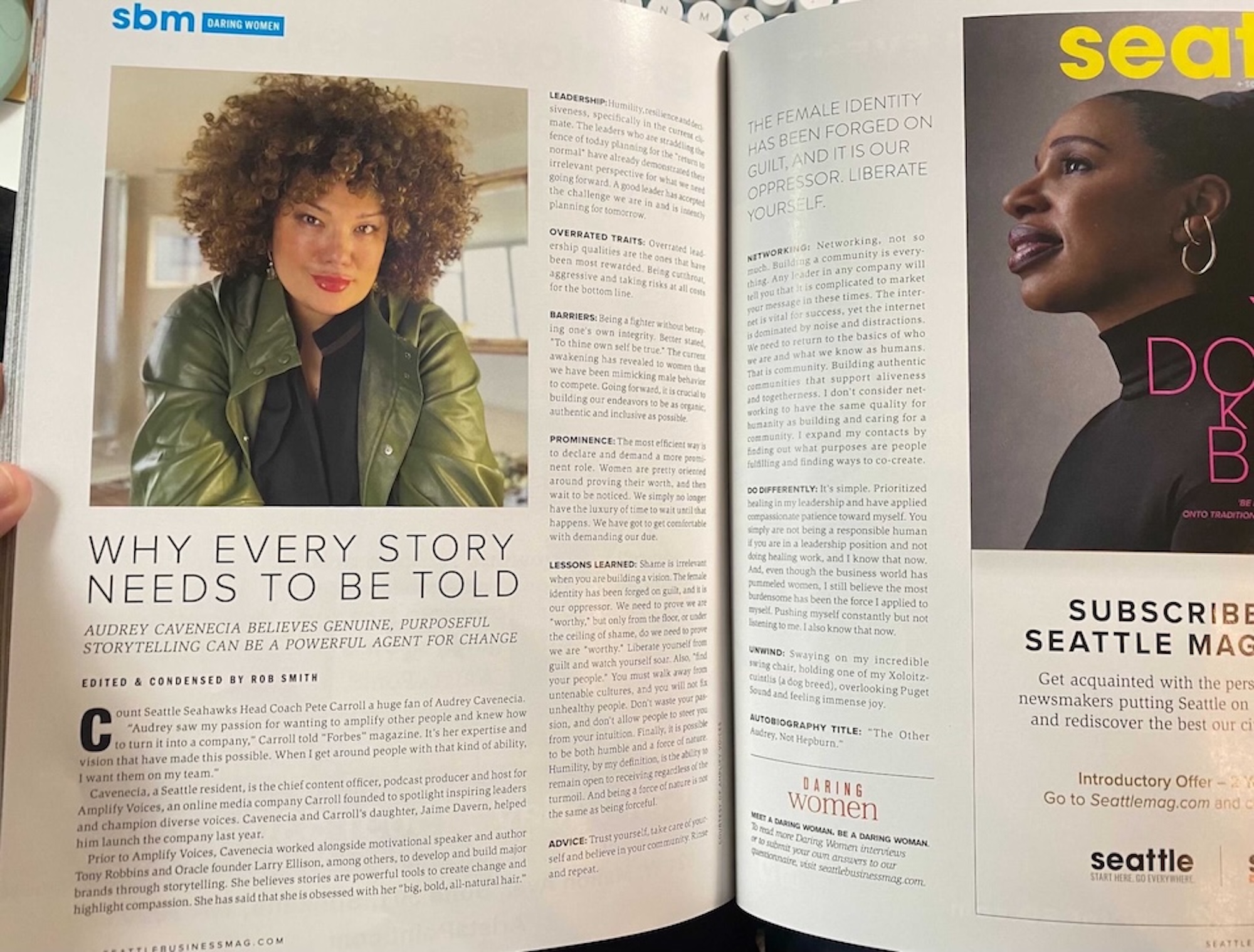
Pete Carroll and Audrey Cavenecia came at it from opposite ends of a working life, a football field and a career that started in entertainment, went into training and development, and came back out as both. What they shared was a conviction that most people are carrying more than anyone has thought to ask them for, and that the right question in the right room puts it in the open. Audrey proposed building a company around that. Pete later told Forbes it was her expertise and vision that made it possible.
The plan was documentaries. The first would follow Pete while keeping him mostly out of frame, pointed instead at the people he wanted an audience to meet. It went into development with William Morris, and then the calendar kept moving. At a follow-up meeting the agency was straight about it: a documentary was a year out at best, and it would need funding and partners before a frame could be shot. Someone in the room said podcasting.
That was the answer, for a reason that had nothing to do with format. A podcast could be built in house, on a shoestring, with no outside money and nobody brought in. It was what the company could make that year, without anyone leaving their house.
PODCASTS
Amplify Voices partnered with Cadence13, who presold the advertising while the company handled production. Conversations from the Heart released in June 2021 with Neil deGrasse Tyson, Cory Booker, Van Jones, Rachel Maddow, Glennon Doyle and Abby Wambach among the early guests.
Three months from a standing start to the first award. Eleven shows over the next two years, more than two million downloads across the catalog, and recognition from Hermes, AVA, MarCom, Webby, Digiday and Shorty. A company that had never made audio was being cited by the people who judge it before it had finished its first year.
The podcast market was already crowded and getting louder, and Amplify Voices was built to make something land rather than to win an attention contest.

Recorded apart, 2021
In 2022 Pete Carroll retired. Rather than close the company, he gave it to Audrey, along with its assets and its trademarks.
He had said from the start that the company was hers in every way that mattered. This made it true on paper.
THE PIVOT
With the company hers, Audrey moved it from consumers to business.
Its people had spent the pandemic inside Netflix, YouTube, TikTok and podcasts, and then sat down to training that sounded nothing like any of it. Learning and development is built on expertise, which is what makes anyone believe a course in the first place. What it had never been given was storytelling. Amplify Voices had spent years inside both, and the two fit.
When OpenSesame signed the company, they had no audio training in their catalog at all. Amplify Voices licensed the podcasts as leadership training to find out whether it would work. It did. Audio became a format enterprise learning could sell, and the feedback showed what to build next.
That became the courses. Audio microlearning, two and a half to five minutes, engineered the same way every time. Audiobooks arrived the way the podcasts did, with a founder’s voice going first.
THE METHOD
What a field calls its weak point is usually the load-bearing wall. We build on it.
Everything published here comes out of one method, and the method is the founder’s. It was built over two decades and tested in industries that had nothing to do with each other, which is the only way to find out whether a way of working is portable or just a good run. It predates this company by years.
Larry Ellison had bought the Hawaiian island of Lanai. Every operator before him had tried to make it a destination the same way, selling aloha, printing the word on hats and koozies, behaving as though they belonged there. Audrey stood in a room of executives and told them the truth about where they were standing. We are outsiders here. We have not earned that word, and we should not use it until you tell us we have. Being outsiders was the true position, and saying it out loud became the ground the brand stood on. Within two years the island was one of the most sought-after destinations in the world.
It ran again at Science 37. The company was a young clinical trials startup, founded by two dermatologists with no software background, trying to be heard in a field where every competitor looked and sounded the same. Biotech presents itself as uniformly serious, and treats its own certainty as arrogance to be apologized for. That certainty is what lets a doctor cut into a body and be sure, so it stayed where it was. What went beside it was humor, which nobody in medicine was using.
Physicians signed on to the network. Technical talent joined a company with no track record. Novartis, Amgen, Sanofi and Google Ventures put money in. Science 37 went public in 2021 at a valuation over one billion dollars.
Tourism and biotech have nothing in common except that both had misread themselves. That is what makes the method worth bringing to a third place.
Enterprise learning is that third place. It decided long ago that the trades were hard to reach, and then built for everyone else, which is the wall Build to Grow stands on. It decided that training has to sound like training. Every course published here starts by finding one of those decisions and building on it, whether the listener is running a crew, managing a team for the first time, or leading the people who do both.
The work runs the same way every time. Sit where people can reach you and listen for the complaint rather than the brief. Find the thing everyone treats as the flaw. Ask what it is holding up, because it is almost always holding something up. Add the one element that changes what it means. Then take away everything that is explaining, until what is left has to carry it alone.
Most of that is refusal, and refusal is the part that cannot be bought in.
OUR FOUNDER

Audrey Cavenecia
Audrey Cavenecia is the founder and Chief Content Officer of Amplify Voices. She started in entertainment, left it for training and development, and spent years learning how to change what people actually do at work. Then she put the two together and built a media company that used storytelling to build brands.
That sequence answers a question people ask about this catalog. A brand strategist would not know how to train a hospital system or a manufacturing floor. Someone who spent years inside learning and development would. She built the brand behind Science 37, a decentralized clinical trials company that went public at a valuation over one billion dollars, backed by Novartis, Amgen, Sanofi and Google Ventures. She writes and leads the majority of the courses published here.
Her way of building is the same each time. Small teams, kept in house, working on budgets that would not cover an agency’s opening invoice. It is how the Lanai work was made, how Science 37 competed against award-winning agencies and won, and how this company published eleven shows in two years without outside funding.
Her father was an automotive painter who built businesses out of his craft. The craft was the thing everything else rested on, and nobody ever built the second half on top of it, the part that comes after the work is good.
She understood that properly during two years off grid, driving across land she had never seen, learning to diagnose an engine because there was nobody else to do it. Hands in it, listening for what was wrong, making the next move without knowing every move after it.
That distinction runs through everything the house publishes. Building happens between you and the work. Growing happens between you and everyone else.
THE WORK AHEAD
The company was founded inside one paradigm shift and is publishing through another. Conversations from the Heart came out of 2020, when what people wanted was something honest and close. What they need now is different.
Most of what is written about AI tells working people what is being taken from them. Very little of it tells them how to lead it. What working people already have is judgment built on years of doing the work, and every catalog published here starts there, whether the listener is a new supervisor, an experienced people leader, part of a team, working in healthcare, or working in the trades.